

AP Course:
AP Chemistry
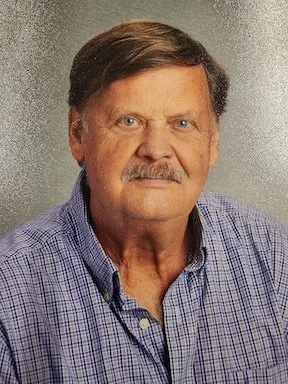
Dale Jensen
CONSULTANT: Dale Jensen
After graduating from the University of Oregon with degrees in Biology and Chemistry, Dale taught Chemistry and Physics in Oregon at North Medford High School for 33 years. During this time, he wrote educational software for the Apple computer; had his own company, Chip-n-Dale Software; earned a fellowship position with Project Seraphim to write educational software for general Chemistry; coached tennis; and became an AP Chemistry Reader and consultant for the College Board.
For the past twenty-five plus years, Dale has been active as an AP Chemistry Exam Reader, Table Leader, and Question Leader. He has worked as a consultant for the College Board conducting weekend, week-long, and international workshops. In 2007, Dale was appointed and served on the SAT Chemistry Test Development Committee.
When he retired from North Medford, Dale was approached by Syracuse High School in Utah to come in for one year and revamp the Chemistry curriculum. In that year, the school saw a 25% increase in their end of course exam.
After moving back to Oregon, Dale was invited to teach for St. Mary’s High School. Being at a small private school means teaching many subjects - Anatomy/Physiology, First year Chemistry, AP Chemistry, AP Physics 1, and AP Physics.
COURSE DESCRIPTION:
SMART Objectives - The participants will …
Plan prepare a calendar that is based on their school’s schedule, the length of the units that need to be covered, and a period of time to practice for the AP Chemistry Exam.
Understand the depth and breadth AP Chemistry curriculum. This will be accomplished by having a good understanding of the CED.
Experience numerous labs and activities that they may incorporate in their course.
Experience different pedagogies that may be used to help a wider range of students.
Understand the format of the AP Chemistry Exam and strategies to increase their student’s performance.
Discuss possible ways to reach out to students giving all willing and academically prepared students the opportunity to participate in AP.
Syllabus:
Monday
AP Chemistry Resources
What AP Stand for …
AP Chemistry Lab Manual
AP Central
How instructors can qualify to teach an AP course - The Audit Requirement
How and when students sign up for the AP class/exam
Access and Equity
AP Action Verbs
AP Classroom - a web page that will help manage …
Checking student progress
Comparing your students to the global participation
College Board Announcements -
The 2025 Scores with comments by Trevor
2025 Chief Reader Report
August 2025 - New Practice Exam will be available
School Calendar … Start planning … Look at the resources - time today???
UNIT 5 - Kinetics
Lab/Activity #1: Sulfur Clock Rx
Lab/Activity #2: Sulfur Clock Rx - Inquiry
Differential Kinetics
Lab/Activity #3: Mass Percentage of Copper in Brass (Flinn)
Lab/Activity #4: Absorption Demo
Tuesday
UNIT 5 – Kinetics (cont.)
Videos and Activities by
Beer's Law
Lab/Activity #5: Colorimetric Equation: What is the Concentration of that Solution?
Lab/Activity #6: AP Investigation: Kinetics: What is the Rate Law? - Integrated
Vernier's SpectroVis and Pasco's new Spectrophotometer
Lab/Activity #7: Radioactive Decay (first year Chemistry) - without the misconception
Lab/Activity #8: Radioactive Decay – AP Level
Mechanism and Energy Diagrams
Wednesday
Transition from Kinetics to Equilibrium
Lab/Activity #9: Dueling Graduated Cylinders
Solubility Simulation
K (equilibrium constant) and k (rate constant) relationship
Lab/Activity #10: Equilibrium: Can We Make the Colors of the Rainbow?
Equilibrium/Acid/Base/Titration Curve
The concepts that you need to know …
What is a weak acid?
What is a buffer?
What is the difference between an endpoint and equivalence?
What happens after equivalence?
Lab/Activity #11: Ka of a Weak Acid - Inquiry - My Final
Solubility
Lab/Activity #12: Trouble of the 2
Why the Ksp is not the best indicator of solubility
First Year Chemistry - Prior Knowledge by Idea
Molecular Orbital Theory
PES Graphing Tool
Thursday
Equity and Access – Individual/School-wide Policy
Intermolecular Forces - Not Van der Waal Forces
Lab/Activity #13: The Evaporation of 3 Liquids
Hydrogen Bonding
Lab/Activity #14: Lab - NH4OH + HCl
Specific Topic to discuss ... Thermodynamics
Entropy
Boltzman Constant
Entropy of matter varies with …
Lab/Activity #15 - #16: Lab – Heat Capacity
Heat Capacity - how important is it? VERY!
Rubber Band Activity
Specific Heat of a Metal
ElectroChem (Electrolytic and Galvanic)
2026 Exam
Rubric
Student Samples